


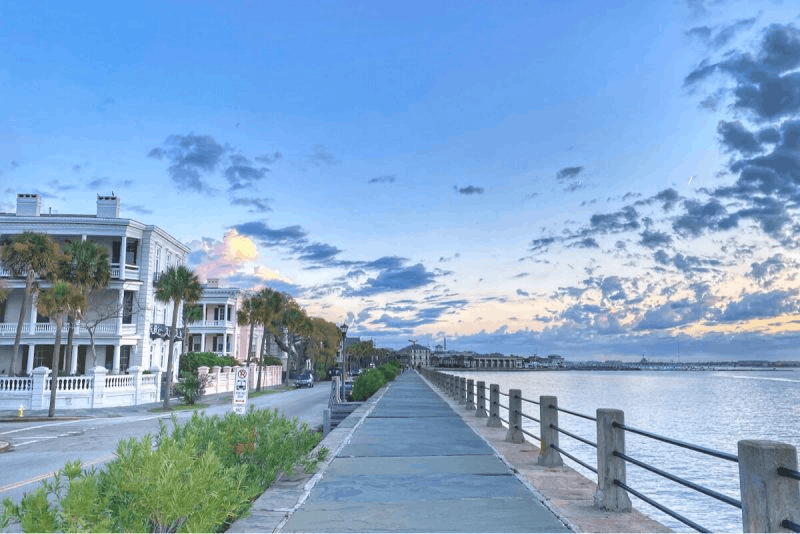
South of Broad is the historic residential area at the southern end of the Charleston peninsula, generally defined as the area south of Broad Street extending toward the Battery and the surrounding waterfront. It contains White Point Garden, Rainbow Row, the Nathaniel Russell House, the Four Corners of Law, and the Heyward-Washington House. Most of its properties are private homes. Visitors explore it primarily on foot.
South of Broad is the historic residential area at the southern end of Charleston's peninsula, generally defined as the area south of Broad Street and extending toward the Battery and the surrounding waterfront. The neighborhood includes historic streets, private homes, gardens, churches, and landmarks such as White Point Garden, Rainbow Row, and the Nathaniel Russell House.
The area is commonly called SOB or "Below Broad" by locals, and residents have long joked about being called SNOBs, a self-aware nickname that reflects the neighborhood's historic prestige. The streetscape combines antebellum mansions, walled gardens, centuries-old churches, and cobblestone lanes. The great majority of properties are private homes, and the neighborhood retains a quiet, residential character.
TABLE OF CONTENTS
- What Is South of Broad in Charleston?
- Where Is South of Broad? Location and Boundaries
- Landmarks in South of Broad
- What to Do in South of Broad
- Dining Near South of Broad
- South of Broad in Literature
- Where to Stay When Visiting South of Broad
- Frequently Asked Questions
What Is South of Broad in Charleston?
South of Broad is one of Charleston's oldest residential areas, with historic streets and buildings dating from the colonial and early national periods. In 1931 the city adopted a historic-district zoning ordinance that created what is recognized as the country's first municipally protected historic district. The ordinance established architectural review and formal protection for historic buildings and areas, and much of what became South of Broad fell within it.
The neighborhood is not a tourist corridor. There are no major retail streets within its boundaries and very few restaurants. What draws visitors is the streetscape itself: a concentrated collection of antebellum homes, ironwork gates, piazzas, and walled gardens that remain in private ownership.
Where Is South of Broad? Location and Boundaries
South of Broad occupies the southern portion of the Charleston peninsula, generally understood as the area below Broad Street. Broad Street forms the northern edge. The neighborhood runs south from there toward the Battery and the waterfront, where the Cooper and Ashley rivers converge at the tip of the peninsula.
The area is sometimes referred to as "the lower peninsula" or simply "Below Broad." Most of the busier commercial sections of downtown Charleston, including King Street and the French Quarter, sit north of Broad Street. South of Broad feels more removed from downtown activity, which is a significant part of its appeal to visitors.
Landmarks in South of Broad Charleston
The following table covers five notable landmarks and visitor attractions in South of Broad.
| Landmark | Address | Admission | Hours / Notes |
|---|---|---|---|
| White Point Garden | 2 Murray Blvd | Free | 9 a.m. to sunset, 7 days a week. City of Charleston park. |
| Rainbow Row | 79-107 East Bay Street | Free exterior viewing | 13 historic row houses, privately owned. View from the sidewalk. |
| Four Corners of Law | Broad and Meeting streets (intersection) | Free exterior viewing | Four historic buildings: church, city hall, county courthouse, federal post office/courthouse. |
| Nathaniel Russell House | 51 Meeting Street | Adults $16; children 6-16 $7; under 6 free | Mon 1–5 p.m.; Tue–Sun 10 a.m.–5 p.m.; last admission 4 p.m. |
| Heyward-Washington House | 87 Church Street | Adults $15; youth 13-17 $12; children 3-12 $6 | Mon-Sat 10 a.m.-5 p.m.; Sun 12-5 p.m.; last audio tour 4:15 p.m. Charleston Museum property. |
White Point Garden and the Battery
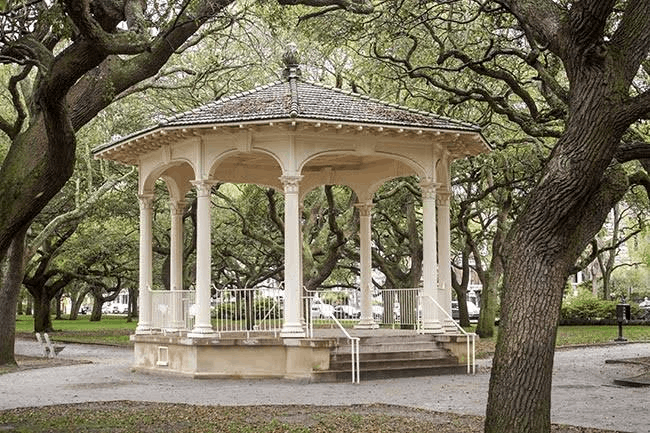
White Point Garden is a free public park maintained by the City of Charleston at 2 Murray Blvd, at the southern tip of the peninsula. The park is open daily from 9 a.m. to sunset and offers views of Charleston Harbor and Fort Sumter across the water. The adjacent Battery promenade is lined with antebellum homes facing the waterfront. For current events and programming, visit charlestonparksconservancy.org.
Rainbow Row
Rainbow Row is a group of 13 historic buildings along East Bay Street, numbered 79-107. The buildings date to the 18th century and originally served as combined businesses and residences, with commercial space on the lower floors and living quarters above. In 1931, preservationist Dorothy Haskell Porcher Legge and her husband restored 99-101 East Bay Street and painted it pink. Other property owners followed with pastel colors, creating the streetscape known today as Rainbow Row. The houses are private residences and are viewed from the sidewalk on East Bay Street.
Four Corners of Law
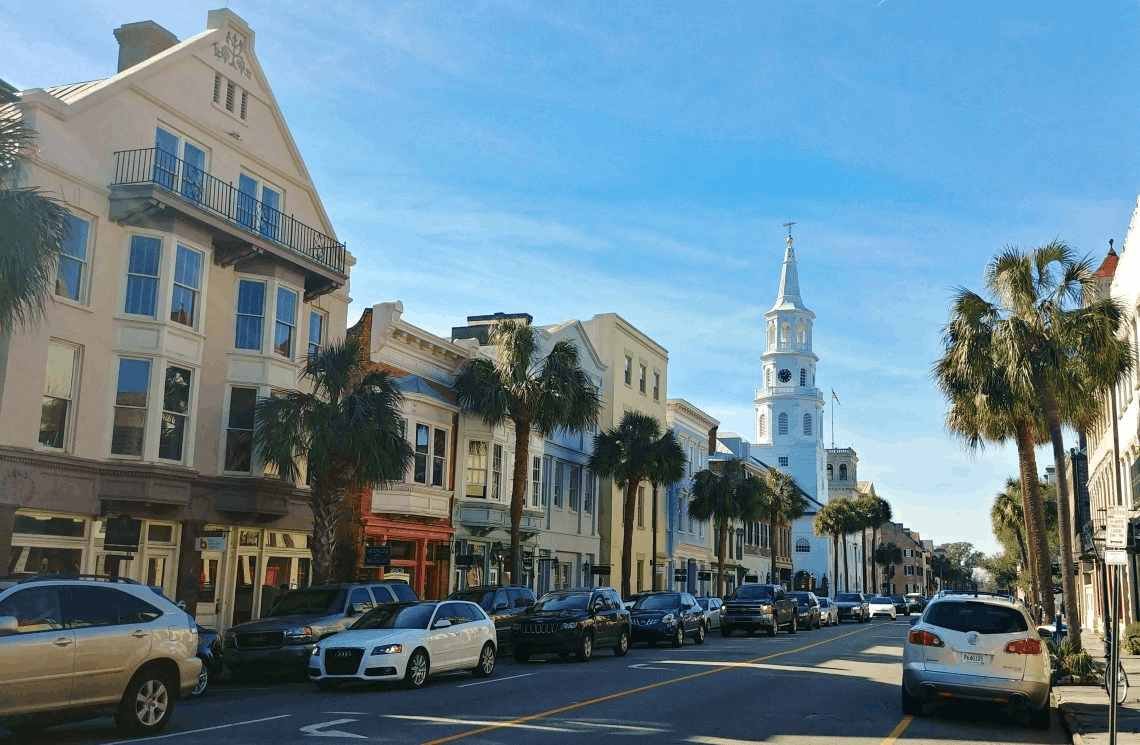
The intersection of Broad and Meeting streets is known as the Four Corners of Law. The name is traditionally attributed to journalist Robert Ripley and refers to the four buildings at the intersection: St. Michael's Episcopal Church, representing God's law; Charleston City Hall, representing municipal law; the Charleston County Courthouse, representing state and county government; and the United States Post Office and Courthouse, representing federal law. St. Michael's was built between 1752 and 1761. City Hall dates to 1802. The historic courthouse was reconstructed in 1792. The federal building was completed in 1896.
Nathaniel Russell House
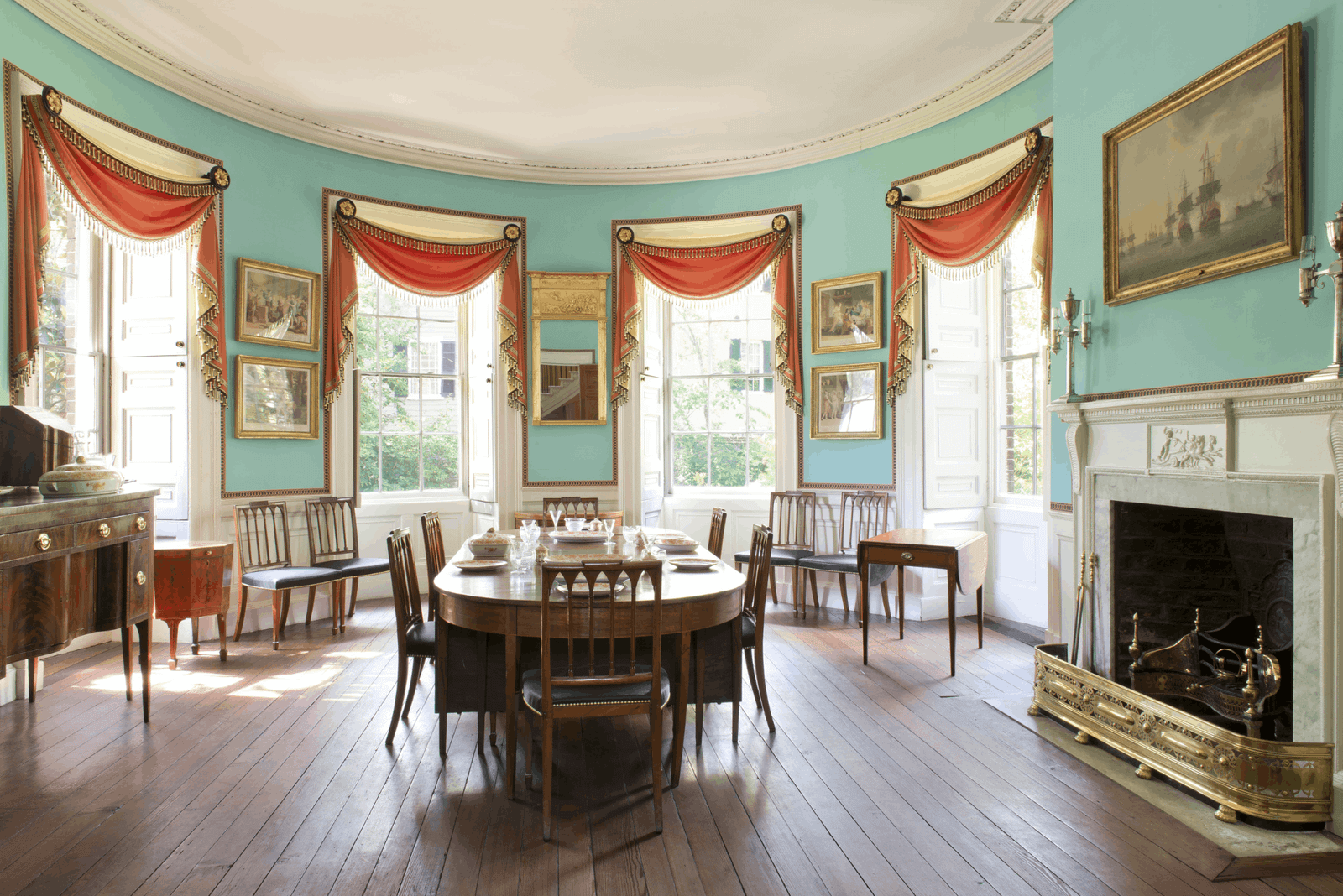
The Nathaniel Russell House at 51 Meeting Street is one of the finest examples of Federal-style architecture in the United States. It was built in 1808 for Nathaniel Russell, a prominent merchant from Rhode Island who settled in Charleston, and was designated a National Historic Landmark in 1960. The house is administered by the Historic Charleston Foundation and is open for guided tours. Admission and hours were verified at historiccharleston.org in September 2026.
- Hours: Monday 1-5 p.m.; Tuesday through Sunday 10 a.m.-5 p.m.; last admission 4 p.m.
- Admission: Adults $16; children ages 6-16 $7; children under 6 free.
Heyward-Washington House
The Heyward-Washington House at 87 Church Street is named for Thomas Heyward Jr., a signer of the Declaration of Independence who owned the property, and for President George Washington, who lodged here during his May 1791 visit to Charleston. The house was built in 1772 and is now a property of the Charleston Museum.
- Hours: Monday through Saturday 10 a.m.-5 p.m.; Sunday 12-5 p.m.; last audio tour begins at 4:15 p.m.
- Admission: Adults $15; youth ages 13-17 $12; children ages 3-12 $6.
What to Do in South of Broad
South of Broad is a residential neighborhood, and visitors explore it primarily on foot. The area does not have the retail density of King Street or the restaurant concentration of the French Quarter. What it offers is a quiet, walkable historic streetscape with landmarks that are either free to view from the street or accessible through paid admission.
The main streets for walking are Church Street, Meeting Street, East Bay Street, and the East Battery. These routes pass Rainbow Row, the Nathaniel Russell House, the Heyward-Washington House, and the Battery promenade. White Point Garden at the southern tip is a natural endpoint for a walking circuit of the neighborhood.
Paid admission is required only for formal house museum tours such as the Nathaniel Russell House and the Heyward-Washington House. All other landmarks in the table above are viewable at no cost.
Dining Near South of Broad
South of Broad has very few restaurants within its boundaries. The neighborhood is primarily residential, and visitors who spend time here typically return north of Broad Street for meals. The French Quarter, the blocks immediately north of Broad Street, and King Street all have a higher concentration of dining options.
South of Broad in Literature: Pat Conroy's Novel
Pat Conroy's 2009 novel South of Broad is set in and around Charleston, following the character Leopold Bloom King through events spanning several decades. The novel draws on the city's landscape and social history, and the Pat Conroy Literary Center confirms it was published in 2009. The book brought the neighborhood's name to wider recognition beyond local architectural and preservation circles.
For visitors familiar with Conroy's work, the streets and landmarks of South of Broad provide a recognizable literary backdrop.
Where to Stay When Visiting South of Broad
South of Broad has no overnight accommodation open to visitors. The neighborhood is almost entirely residential and its historic properties are private homes, not hotels or rentals.
257 Rutledge is a bed and breakfast located in Cannonborough-Elliottborough, north of the Historic District. It is not in South of Broad, but it provides a base for visiting the neighborhood and other parts of downtown Charleston. The property offers private-entry suites, furnished apartments, and a standalone three-bedroom home. A shared, heated saltwater guest pool is available to all guests, along with guest parking.
For more information about downtown Charleston accommodation options, visit bed and breakfast downtown Charleston.
Frequently Asked Questions
South of Broad is the historic residential area at the southern end of the Charleston peninsula, generally defined as the area south of Broad Street extending toward the Battery and the surrounding waterfront. It contains some of Charleston's oldest homes, churches, and public spaces, including White Point Garden, Rainbow Row, the Four Corners of Law, and the Nathaniel Russell House.
Yes. South of Broad is a walkable neighborhood. Visitors commonly walk along Church Street, Meeting Street, East Bay Street, and the East Battery to view the historic streetscape and landmarks. Most properties are privately owned residential homes. The interiors of most historic homes are not open to the public. White Point Garden at the southern tip is a free public park open daily from 9 a.m. to sunset.
South of Broad is a primarily residential neighborhood that visitors regularly explore on foot. As with any urban destination, visitors should follow normal precautions, stay aware of their surroundings, and respect private homes and residential properties.
The Battery refers to Charleston's historic seawall and waterfront promenade along the southern edge of the peninsula. The High Battery runs along East Battery Street, while the Low Battery extends along Murray Boulevard. White Point Garden sits at the southern end of the peninsula beside the Low Battery and offers views toward Charleston Harbor and Fort Sumter.
South of Broad has no overnight accommodation open to visitors. Most visitors stay in nearby downtown Charleston neighborhoods. 257 Rutledge, a bed and breakfast in Cannonborough-Elliottborough, offers private-entry suites, furnished apartments, and a standalone three-bedroom home with a shared heated saltwater guest pool and guest parking.